Essays & Articles
Ancient revelation. Present questions. The human condition between them.
The Qur’an speaks across centuries because the questions it raises remain deeply human.
How do we lead when the path forward is unclear? How do we disagree without losing ourselves? What happens to character when pressure rises? And what can moments revealed centuries ago teach us about the relationships, organizations, and choices we navigate today?
These essays bring the Qur’an into conversation with contemporary questions of leadership, character, relationships, and human behavior. Not to make revelation modern, but to discover how remarkably present its guidance already is.
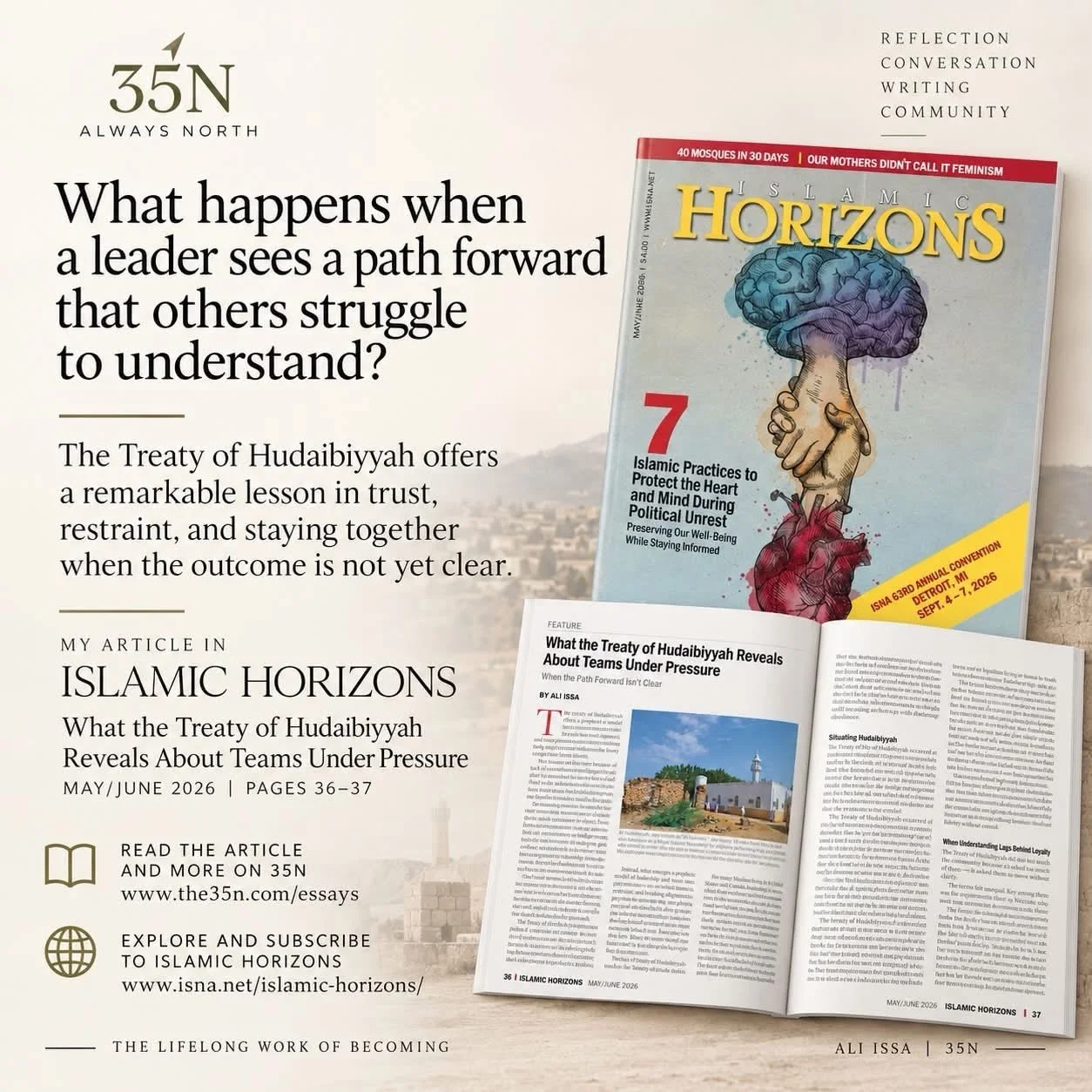
What the Treaty of Hudaibiyyah Reveals About Teams Under Pressure
When the Path Forward Isn’t Clear
Published in Islamic Horizons, May/June 2026. pp.36-37
What happens to a team when the leader can see a path forward that everyone else is struggling to understand?
At Hudaybiyah, the companions had traveled expecting to enter Makkah. Instead, they faced a treaty whose terms appeared painful, disappointing, and difficult to understand. The destination they had hoped for seemed farther away, not closer.
Yet this moment became one of the Qur’an’s most remarkable lessons in leadership under pressure.
This essay explores Hudaybiyah as a model of prophetic leadership under strain, examining how trust, restraint, and embodied leadership can preserve a community when clarity is limited and the outcome has yet to reveal itself.
It asks a question that reaches far beyond Hudaybiyah:
How do we lead, and how do we remain together, when the path forward is not yet clear?
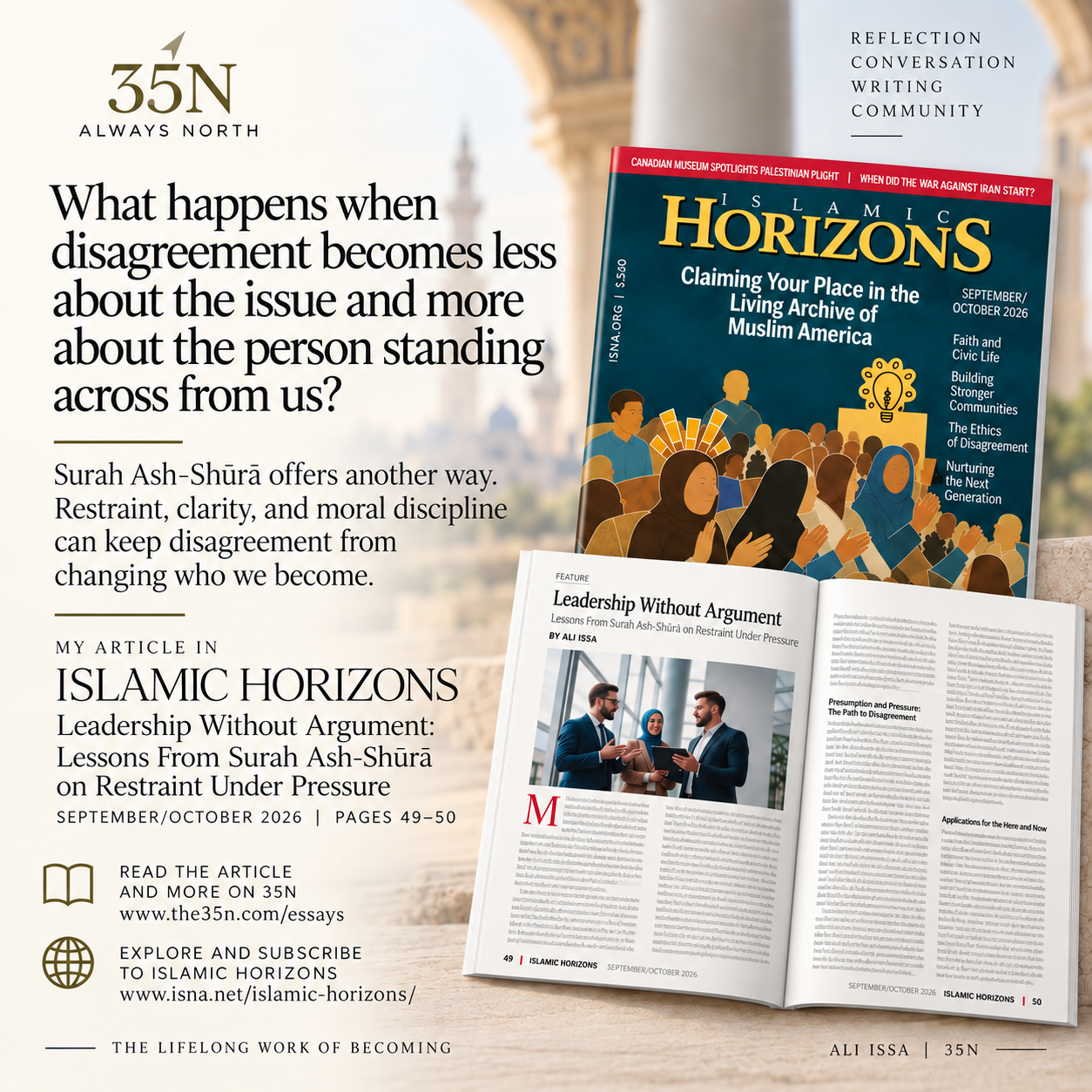
Leadership Without Argument
Lessons From Surah Ash-Shūrā on Restraint Under Pressure
Published in Islamic Horizons, September/October 2026. pp.49-50
What happens when disagreement becomes less about the issue and more about the person standing across from us?
Some of the most difficult moments in leadership begin when disagreement turns personal. We defend ourselves. We justify our position. And sometimes, without realizing it, we begin treating the other person as the problem.
Surah Ash-Shūrā offers another way.
This essay explores how the Qur’an addresses the inner posture we carry into disagreement, and how restraint, clarity, and moral discipline can keep conflict from changing who we become.
It asks a question that reaches beyond leadership:
Can we hold firmly to what we believe without allowing disagreement to harden the way we see one another?